How Arizona Heat Affects Your Concrete Driveway (And How to Prevent Cracks)
Arizona heat can crack and weaken your driveway over time. Learn why it happens and how proper installation prevents costly damage. Get a free estimate today.
7/8/20263 min read
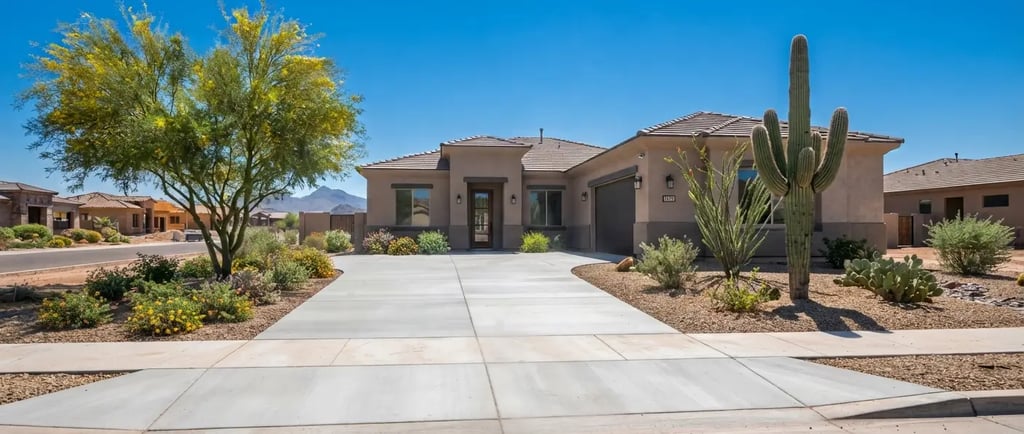
If you've lived in Buckeye for more than one summer, you already know what triple-digit heat does to everything outside — including your driveway. Concrete looks tough, but Arizona's climate puts it through a workout that few other states can match. Extreme heat, expansive soil, and sudden monsoon downpours all play a role in whether your driveway lasts 30 years or starts cracking after five.
The good news? Most heat-related concrete problems are preventable when the slab is built correctly from the start. Here's what's really happening to your concrete in the summer sun, and how homeowners can protect their investment.
Why Arizona Heat Is So Hard on Concrete
Concrete is a durable material, but it's also constantly reacting to temperature and moisture changes. In Buckeye's climate, that reaction happens fast and often.
Rapid Curing Leads to Weak Spots
Fresh concrete needs to cure slowly and evenly to reach its full strength. When surface temperatures climb into the 100s, the top of the slab can dry out far faster than the concrete underneath. This uneven curing weakens the surface layer, making it more prone to flaking, dusting, and early cracking.
Expansion and Contraction
Concrete naturally expands when it heats up and contracts as it cools overnight. Over months and years, that constant movement puts stress on the slab. Without the right joint spacing, that stress has nowhere to go — except into a crack.
Expansive Soil Movement
Much of the soil around Buckeye and the greater West Valley has a high clay content, which swells when wet and shrinks when dry. Combine that with our short but intense monsoon season, and you get soil that shifts underneath the slab throughout the year. If the base wasn't compacted properly before the pour, that movement shows up as settlement, uneven sections, or cracking on the surface.
UV Exposure and Surface Wear
Direct sun exposure breaks down the surface of unsealed concrete over time, leading to a rougher, more porous texture that shows dirt, tire marks, and stains more easily.
Warning Signs Your Concrete Is Struggling With the Heat
Not every crack means you need a full replacement, but these signs are worth having a professional take a look at:
Hairline cracks that seem to spread each summer
Sections of the driveway that feel uneven or "bouncy" underfoot
Pooling water after rain instead of proper drainage
Chipping, flaking, or a rough, sandy surface texture
Cracks near the garage, expansion joints, or where the driveway meets the street
If you're noticing any of these, our team can help you decide whether concrete repair and replacement or a full re-pour makes more sense for your situation.
How We Build Concrete to Handle Buckeye's Climate
The difference between a driveway that lasts decades and one that cracks within a few years almost always comes down to what happens before the pour. Here's what we do differently:
Proper soil compaction — We prepare and compact the base so the slab has stable, even support, reducing the risk of settlement from shifting clay soil.
Correct slab thickness and reinforcement — Driveways see daily vehicle weight, so they need the right thickness and rebar or mesh reinforcement for long-term strength.
Strategic control joints — Placing joints at the right intervals gives concrete a planned place to crack, protecting the rest of the surface from random cracking.
Proper slope and drainage — Correct grading keeps monsoon rain moving away from your home and foundation instead of pooling on the slab.
Curing time and care — We walk every client through proper curing and care steps for the first 30 days, since early care makes a real difference in long-term durability.
If you're planning a new pour, our concrete driveway installation and replacement page covers what to expect from start to finish.
Simple Ways Homeowners Can Extend the Life of Their Concrete
Once your driveway is installed, a little routine care goes a long way in our climate:
Seal the surface every couple of years to protect against sun, oil stains, and moisture.
Rinse off dirt and debris regularly rather than letting it bake into the surface.
Watch for early hairline cracks and address them before monsoon rain gets underneath the slab.
Avoid parking heavy trailers or equipment on driveways that weren't designed for that load — if you need a surface built for it, ask us about RV pads designed specifically for heavier vehicles.
Thinking About Upgrading Your Driveway or Patio?
If your current concrete is cracking, uneven, or just past its prime, summer heat will only make the problem worse. Homeowners looking for a decorative upgrade might also consider stamped and colored concrete for a driveway or entryway that adds curb appeal while still holding up to Arizona conditions.
Get a Free On-Site Estimate in Buckeye, AZ
Every property is a little different, and the best way to know what your concrete needs is a proper on-site evaluation. Our team will look at your soil, drainage, and existing slab condition, then walk you through your options with a clear, written estimate — no pressure, no guesswork.
Ready to protect your driveway from another Arizona summer? Contact us today to schedule your free estimate, or call (623) 267-3638.
© 2026. All rights reserved.
(623) 267-3638
info@buckeyeconcreteaz.com
Office Hours:
Monday - Friday: 7:00 AM - 5:00 PM
Saturday: 8:00 AM - 4:00 PM
Buckeye, AZ
CONTACT