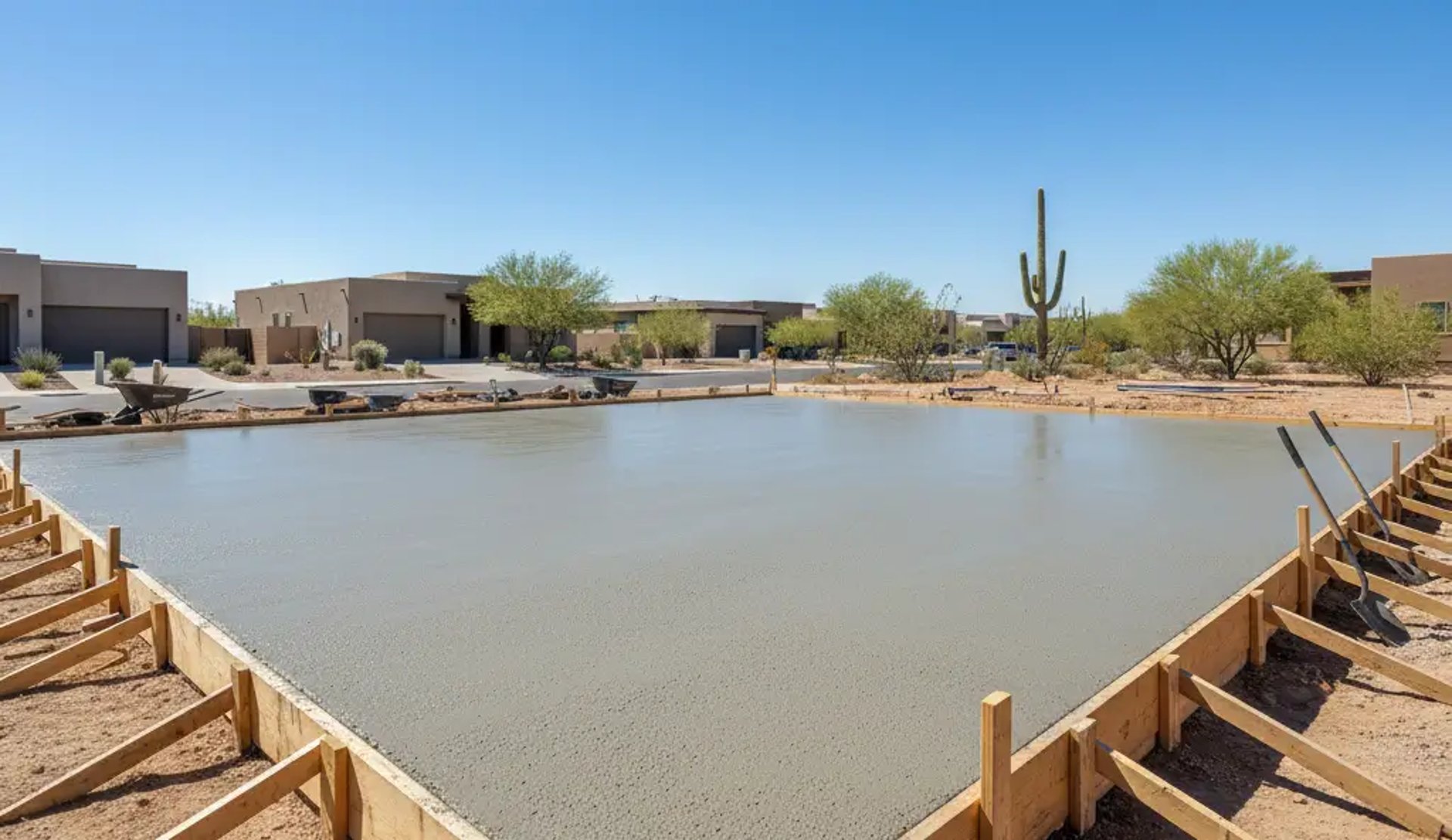
A concrete slab is only as good as the prep underneath it. If you’re building a shed, garage, workshop, or home addition in Buckeye, you need a slab that’s level, reinforced correctly, and built with drainage in mind.
Buckeye Concrete AZ pours and replaces concrete slabs with clear planning, solid base prep, and clean finishing—so your slab holds up to daily use in Arizona conditions.
FREE QUOTE
Concrete Slab Services in Buckeye (Sheds, Garages, Additions & Pads)
We handle slab projects for homeowners and light commercial properties across Buckeye. Whether you’re starting from scratch or replacing damaged concrete, we’ll recommend the most practical approach for how you’ll use the space.
Concrete slab services we offer:
New slab pours for sheds, garages, workshops, and additions
Remove & replace old, cracked, or uneven slabs
Slab extensions to expand usable space
Site prep & grading for a stable base and better drainage
Form setting & layout for straight lines and accurate dimensions
Reinforcement options based on load and soil conditions
Finish options (based on the project)
Haul-away included for replacement jobs
Not sure what you need? We’ll look at access, slope, and what the slab must support—and walk you through options before you decide.




Slab Prep That Prevents Cracks & Settling (Base, Compaction, Drainage)
Most slab problems start before the pour. A strong slab begins with:
Proper grading so water moves away from structures
A compacted base that supports the slab evenly
Forms set to the right height for a clean, level finished surface
Reinforcement and control joints to help manage movement over time
In Buckeye, heat and soil movement can be tough on flatwork. That’s why we focus on prep details that protect your slab long after the concrete cures.

Slabs We Pour in Buckeye (Shed Slabs, Garage Slabs, Equipment Pads & More)
We pour slabs for many common property projects, including:
Shed slabs
Garage slabs
Workshop slabs
Home addition slabs
Storage pads / utility pads
Equipment pads (generators, HVAC pads, etc.)
A shed slab doesn’t need the same build as a slab that will hold vehicles or heavy equipment. We’ll recommend the right thickness, reinforcement approach, and finish based on real use—not guesswork.
Slab Thickness & Reinforcement Guide (Shed vs Garage vs Equipment)
Shed / light storage slabs: commonly around 4" for typical backyard shed loads; upgrade if you’re storing heavier items (mowers, tool chests, etc.).
Garage slabs (vehicles): often 4" minimum, with many builds moving to 5–6" for added durability—especially with heavier vehicles or frequent use.
Equipment pads (HVAC/generator/containers): thickness and reinforcement depend on weight + point loads; heavier equipment usually calls for thicker concrete and stronger reinforcement planning. (Your on-site review determines this.)
Reinforcement options (picked by load + soil + slab size):
Wire mesh (helps with crack control when properly placed)
Rebar (common for heavier loads/edges/open spans)
Fibers (sometimes used as an additive)
Control joints matter as much as steel: planned joints help cracks occur in the “right place,” instead of randomly across the slab.
What we confirm before recommending a build: intended use, access/grade, base condition/compaction needs, drainage path, and where joints should go.
Pricing Factors (What Changes the Cost in Buckeye?)
Square footage: bigger slabs increase materials + labor.
Thickness: 4" vs 5–6" changes concrete volume and cost.
Reinforcement choice: mesh vs rebar vs other options changes labor + material.
Site prep needs: grading, excavation, added base material, and compaction can be major cost drivers.
Removal & haul-away: demo/disposal of an old slab increases total cost.
Access constraints: tight gates, backyard pours, or limited truck access can require extra labor/equipment.
Finish requirements: simple broom/smooth vs more detailed finishing impacts labor time.
Permitting / inspections (if applicable): varies by project type and can add steps to the timeline and budget.
Our Concrete Slab Process (Layout → Base → Forms → Pour → Finish)
Site Visit & Load Requirements
We inspect the area, confirm what the slab will support, and check slope, access, and drainage needs.
Thickness, Reinforcement & Control Joints
We confirm slab thickness, reinforcement (when needed), and joint planning to help reduce random cracking.
Pour Day, Finish Options & Cleanup
We pour, level, and finish to match the project. We keep the jobsite clean and protect edges and forms.
Cure Time & When You Can Use It
We tell you exactly when it’s safe for foot traffic, framing/building, and heavier loads.
Built for Buckeye Conditions (Soil, Heat, Drainage)
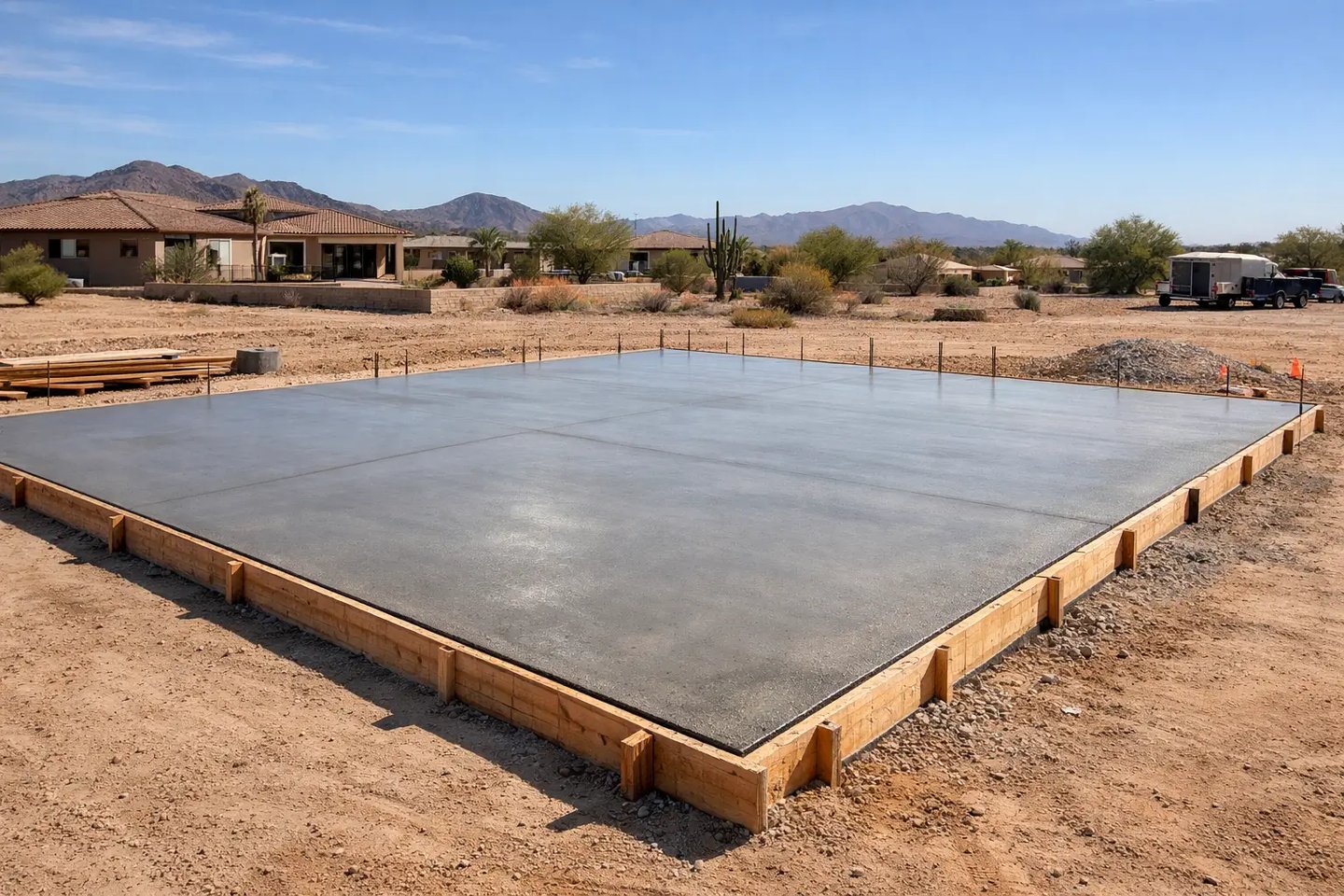
Buckeye slabs need to stay level and perform in desert heat. We plan for:
drainage and runoff
stable base preparation
the right reinforcement choices for the project
You get clear communication from start to finish—and a slab you can build on with confidence.
Get a Free On-Site Slab Estimate in Buckeye
If you need a concrete slab in Buckeye, AZ, call Buckeye Concrete AZ for a free on-site estimate. We’ll measure the area, talk through options, and give you straightforward pricing based on your actual project.
Concrete Slab FAQs (Buckeye, AZ)
1) How much does a concrete slab cost in Buckeye?
Slab pricing depends on square footage, thickness, base prep, access, reinforcement needs, finish choice, and whether existing concrete must be removed. The fastest way to get accurate numbers is a free on-site estimate where we can measure, check grade, and confirm the slab’s intended use.
2) How thick should a concrete slab be?
It depends on what you’re putting on it. A shed slab is typically built differently than a garage slab that supports vehicles or a pad for heavier equipment. We’ll recommend thickness after we review load, soil conditions, and the project plan.
3) How long does it take to pour a concrete slab?
Many slab pours can be completed in one day, but the full timeline includes layout, base prep, forms, and cleanup. Weather, access, and project size can also affect scheduling. We’ll give you a clear plan before work begins.
4) How long before I can use a new concrete slab?
Foot traffic is usually possible earlier than heavier use. If you’re framing on it, placing equipment, or driving on it, you’ll need additional curing time. We’ll give you project-specific guidance so you don’t damage the surface too soon.
5) Do I need rebar or wire mesh in a concrete slab?
Sometimes. Reinforcement depends on slab size, thickness, soil, and load requirements. For heavier use slabs, reinforcement can improve performance. We’ll recommend the best option during the estimate based on what the slab is designed to support.
© 2026. All rights reserved.
(623) 267-3638
info@buckeyeconcreteaz.com
Office Hours:
Monday - Friday: 7:00 AM - 5:00 PM
Saturday: 8:00 AM - 4:00 PM
Buckeye, AZ
CONTACT